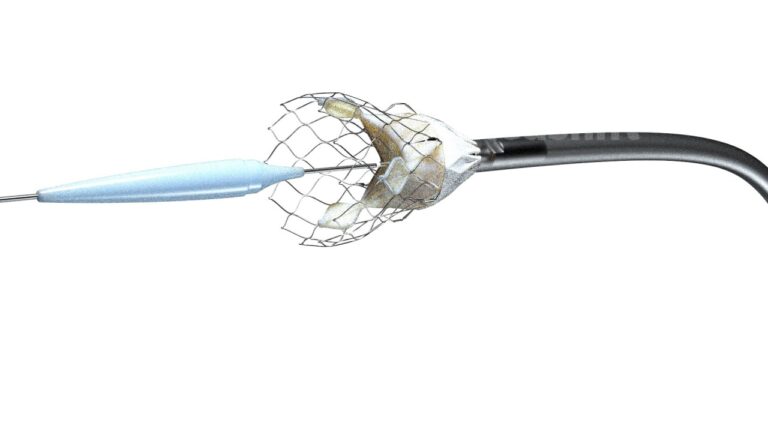
Transapical Transcatheter Aortic Valve Implantation System
What is TAVI or TAVR ?
TAVI or TAVR stands for transcatheter aortic valve implantation or replacement.
This is a minimally invasive procedure that allows inserting a new valve without removing the old, diseased valve. The new valve is placed inside the old valve which is unable to function properly and in many cases requires replacement.
The collapsible new valve is delivered through a catheter (a thin wire or tube) – such an approach is somewhat similar to placing a stent in the artery. Once the new valve is delivered to the implantation site, it expands and pushes the old valve leaflets out. The new valve then takes over the job of regulating the blood flow.
Ergonomic Design
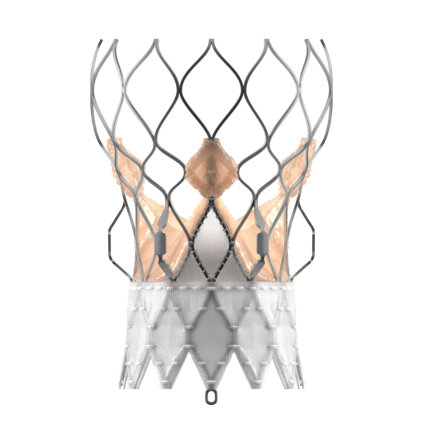
The TAVI XPAND valve consists of an external Dacron cuff that supports the platform configuration.
LEAFLETS
Bovine pericardium
CUFF
DACRON
STENT
Self-expanding nitinol
STERILIZATION
Chemical
STORAGE SOLUTION
TLS
STORAGE TEMPERATURE
5 ℃ – 25 ℃
What is involved in the procedure?
1
Valve replacement usually requires open-heart surgery, in which the chest is surgically separated. Alternatively, the TAVR (or TAVI) procedure can be done through very small openings making the procedure less invasive.
2
Patients usually need less time for postoperative recovery after the TAVI procedure compared to valve replacement when using open-heart surgery.
3
The TAVI procedure can be performed using several protocols/techniques, allowing the interventional cardiac surgeon to choose the one that would provide the best and safest way to access the valve.
4
While TAVI is not without certain risks, it allows surgical treatment options to people who are not considered candidates for valve replacement using open-heart surgery for a variety of reasons
Special Features of TAVI XPAND™ Delivery System
Who will benefit from TAVI?
The TAVI procedure has demonstrated to be alternative effective in patients with symptomatic severe aortic stenosis in all risk categories (low, moderate or high) for valve replacement using standard open-heart surgery.
No need to stop the heart or use cardiopulmonary bypass for the procedure
Minimal risk of infection
Minimal injury to the chest and the heart muscle
Shorter hospital stay
Quicker time of postoperative recovery
Ability to resume daily activities and get back to your normal life faster
The TAVI procedure has demonstrated to be rather effective in patients with symptomatic severe aortic stenosis in all risk categories (low, moderate or high) for valve replacement using standard open-heart surgery.